
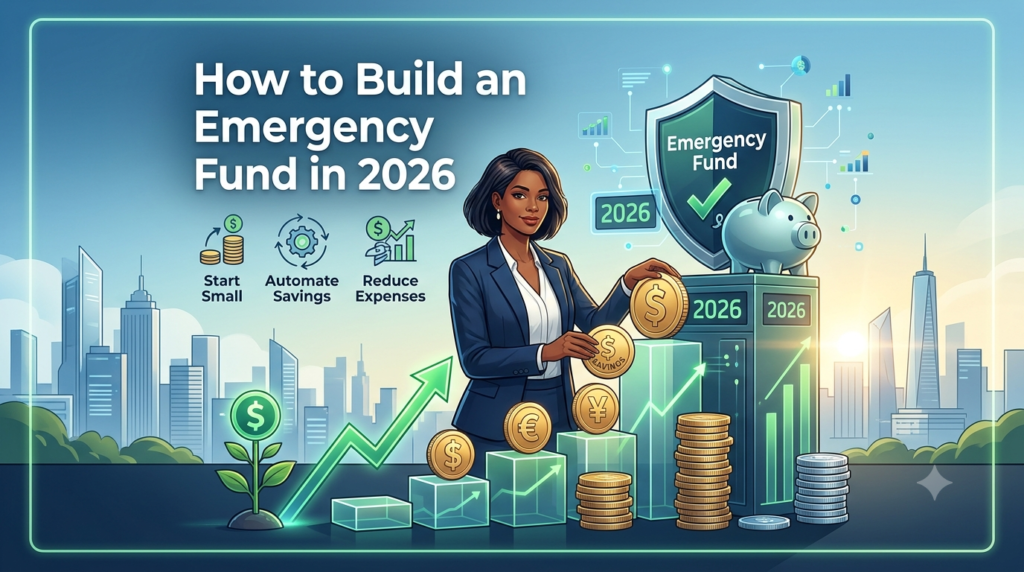
How to Build an Emergency Fund in 2026: Complete Step-by-Step Guide
A practical, realistic plan to create a financial safety net — even if you are starting from zero or living paycheck to paycheck.
This guide shows you exactly how much to save, where to keep the money, how to build the fund step by step, and what to do when progress feels slow.
An emergency fund is one of the most important foundations of personal finance. It is money set aside specifically for unexpected expenses such as medical bills, car repairs, job loss, urgent home repairs, or other financial surprises.
Without an emergency fund, many people end up relying on credit cards, personal loans, or family assistance when something goes wrong. This often creates new debt, added stress, and a cycle that is hard to escape. Building even a small emergency fund can dramatically improve your financial stability and peace of mind.
Start with a $1,000 starter emergency fund, then build toward 3–6 months of essential living expenses. Keep the money in a high-yield savings account so it remains safe, accessible, and earns competitive interest.
Why You Need an Emergency Fund
Life is unpredictable. Even careful planners face surprise expenses. An emergency fund gives you options and reduces the pressure to go into high-interest debt when problems arise.
Key benefits include:
- Protection against unexpected costs
- Lower stress during difficult periods
- Ability to avoid or minimize high-interest debt
- Greater financial confidence and flexibility
- Freedom to make better long-term decisions instead of reactive ones
An emergency fund is not about predicting the future. It is about preparing for the reality that unexpected events will occur.
How Much Should You Save in an Emergency Fund?
Most financial experts recommend saving enough to cover 3 to 6 months of essential living expenses.
Essential expenses typically include:
- Rent or mortgage
- Utilities
- Groceries and basic household needs
- Transportation
- Insurance premiums
- Minimum debt payments
- Basic healthcare costs
A simple way to calculate your target:
- Add up your essential monthly expenses.
- Multiply that number by 3 (minimum recommended) or 6 (more secure buffer).
Example: If your essential monthly expenses total $3,000, your target emergency fund would be $9,000 to $18,000.
Starter Goals for Beginners
If 3–6 months feels overwhelming, break the process into smaller milestones:
- First goal: $500 – $1,000
- Second goal: 1 month of essential expenses
- Final goal: 3–6 months of essential expenses
Reaching the first $1,000 is often the hardest part psychologically. Once that milestone is achieved, momentum usually increases.
Where to Keep Your Emergency Fund
The best place for an emergency fund is a high-yield savings account. This type of account offers:
- Higher interest than traditional savings accounts
- Easy access when you need the money (typically 1–3 business days for transfers)
- FDIC or NCUA insurance when offered by insured institutions
You can compare current top options here: Best High-Yield Savings Accounts.
Learn more about how these accounts work: What Is a High-Yield Savings Account?
Avoid keeping your full emergency fund in:
- Regular checking accounts (too easy to spend accidentally)
- Long-term stock market investments (value can drop when you need the money most)
- Long-term certificates of deposit with early withdrawal penalties (reduced accessibility)
Step-by-Step: How to Build Your Emergency Fund
Step 1: Calculate Your Target and Starter Goal
Write down your essential monthly expenses and decide whether you are aiming for 3 months or 6 months of coverage. Also set a realistic starter goal of $1,000 if you are beginning from zero or near zero.
Step 2: Open the Right Account
Open a high-yield savings account that has no monthly fees, is easy to transfer money into and out of, and is held at an FDIC- or NCUA-insured institution. Keep this account separate from your everyday checking account to reduce the temptation to spend the money.
Step 3: Start Small and Automate
Set up an automatic transfer from your checking account to your emergency fund on payday. Even $25, $50, or $100 per paycheck adds up over time. Automation removes the need to rely on willpower every month.
Step 4: Use Windfalls Intentionally
Direct tax refunds, work bonuses, gifts, stimulus payments, or money from selling unused items straight into your emergency fund. These one-time boosts can significantly accelerate progress.
Step 5: Temporarily Reduce One Expense Category
Identify one area where you can cut back for a few months (unused subscriptions, dining out frequency, or discretionary shopping) and redirect that money to savings. Small, focused cuts are usually more sustainable than drastic across-the-board restrictions.
Step 6: Track Progress and Celebrate Milestones
Check your balance monthly. When you reach your starter goal, acknowledge the achievement. Then continue toward the full 3–6 month target. Progress compounds both financially and psychologically.
How to Build an Emergency Fund When Money Is Tight
If your budget is limited, focus on consistency rather than large amounts:
- Start with $10–$25 per week if that is realistic
- Automate the transfer on payday so it happens before other spending
- Sell items you no longer need and put the proceeds into the fund
- Temporarily pause non-essential spending categories
- Use round-up or cash-back tools if available and redirect the savings
Small, regular contributions are far more powerful than waiting until you “have enough” to start. The habit of saving matters as much as the dollar amount in the early stages.
Common Mistakes to Avoid
- Keeping the emergency fund in a low-interest traditional savings or checking account
- Using the money for non-emergencies (vacations, wants, or planned expenses)
- Investing the entire emergency fund in the stock market
- Setting an unrealistically high first goal that feels impossible and leads to inaction
- Forgetting to replenish the fund after you use it
- Mixing emergency savings with other goals in the same account
Emergency Fund vs Other Savings Goals
Your emergency fund should be separate from other goals such as vacation savings, a house down payment, a new car, or retirement. Treat it as dedicated protection money.
Once your emergency fund reaches a solid level (at least 3 months of expenses), you can focus more aggressively on other financial priorities such as high-interest debt repayment, retirement contributions, or medium-term goals.
What Counts as a True Emergency?
A true emergency is generally an unexpected, necessary expense that cannot be reasonably delayed or covered by regular cash flow. Examples include:
- Sudden medical or dental expenses
- Essential car repairs needed for work
- Job loss or significant reduction in income
- Urgent home repairs that protect health or safety
- Emergency travel for family crises
Planned expenses, lifestyle upgrades, and discretionary purchases are not emergencies and should be funded separately.
How the Emergency Fund Fits With the Rest of Your Finances
An emergency fund works best as part of a broader system that includes:
- A working budget (such as the 50/30/20 rule)
- A plan to eliminate high-interest debt
- Consistent retirement contributions once the foundation is stable
- Clear separation between short-term protection money and long-term investment money
You can explore the 50/30/20 framework here: The 50/30/20 Budget Rule.
Frequently Asked Questions
How long does it take to build an emergency fund?
It depends on your income, expenses, and how much you can consistently save. Many people reach a $1,000 starter fund within a few months and a full 3–6 month fund within one to three years.
Should I build an emergency fund or pay off debt first?
A common approach is to build a small starter emergency fund first ($1,000), then focus aggressively on high-interest debt while continuing to make modest emergency fund contributions. Once high-interest debt is under control, return to fully funding the emergency reserve.
Is $1,000 enough?
$1,000 is an excellent starting point that covers many common smaller emergencies. It is not a complete emergency fund for most households, but it is far better than zero.
What if I have to use the emergency fund?
That is exactly what it is for. Use it for true emergencies, then prioritize replenishing it as soon as possible.
Final Thoughts
Building an emergency fund is one of the highest-return financial habits you can develop. It does not require perfect conditions or a high income — it requires starting and staying consistent.
Begin with a realistic starter goal, keep the money in a safe high-yield savings account, automate your contributions, and protect the fund for actual emergencies. Over time you will create a meaningful safety net that reduces stress and gives you greater control when life becomes unpredictable.
Ready to choose an account for your emergency fund? Start here: Best High-Yield Savings Accounts.